




Description
Electric Floor Heating Cable for Custom Layouts
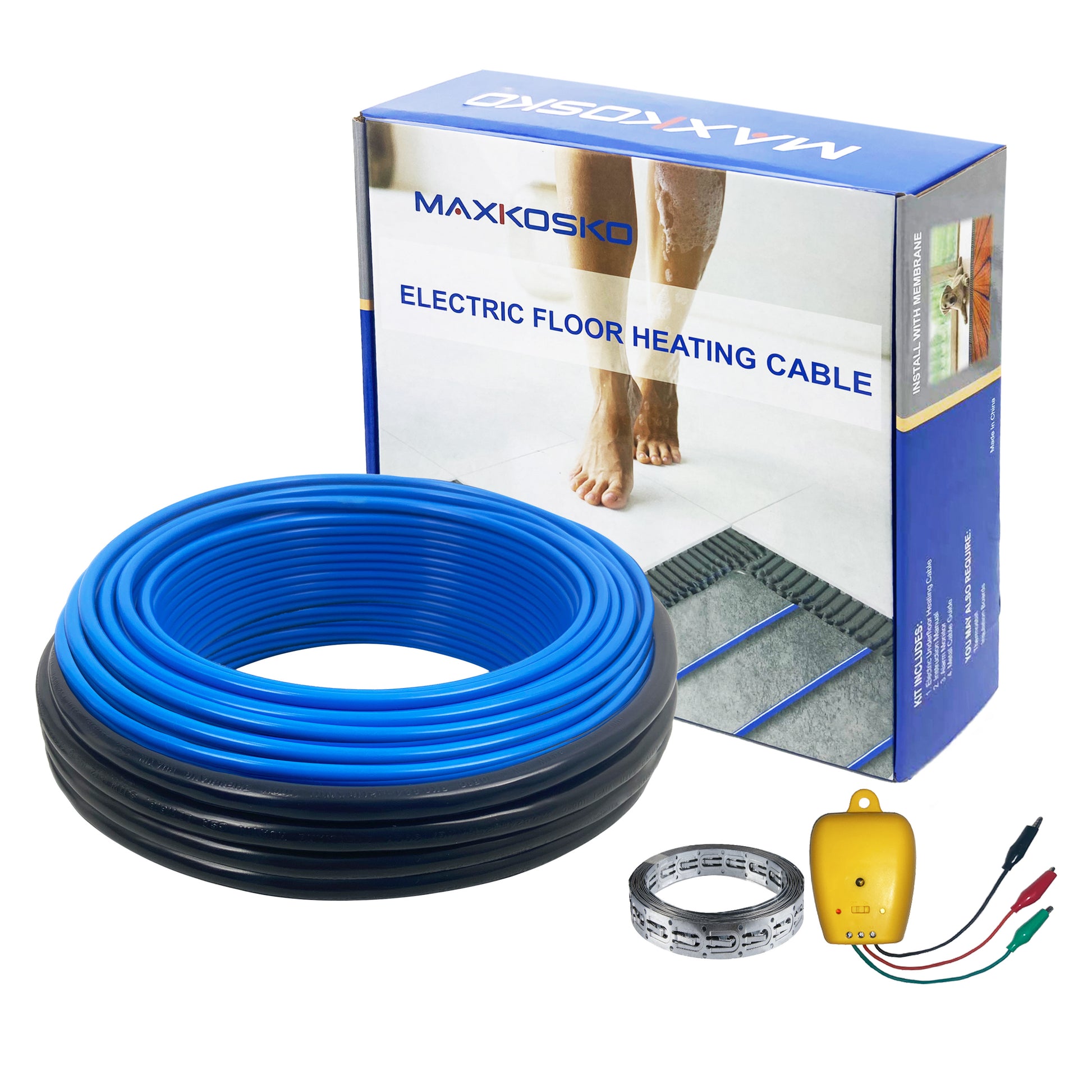
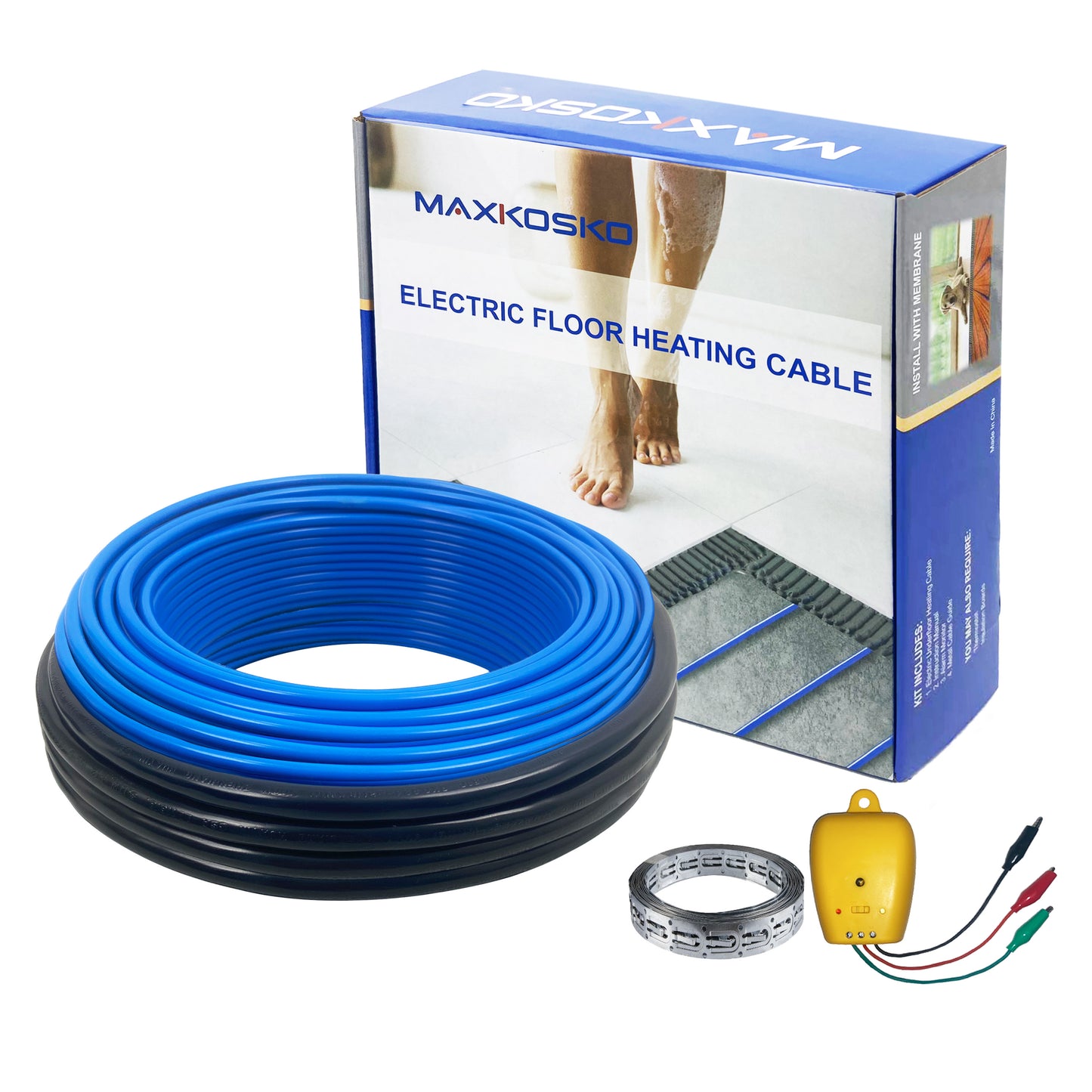
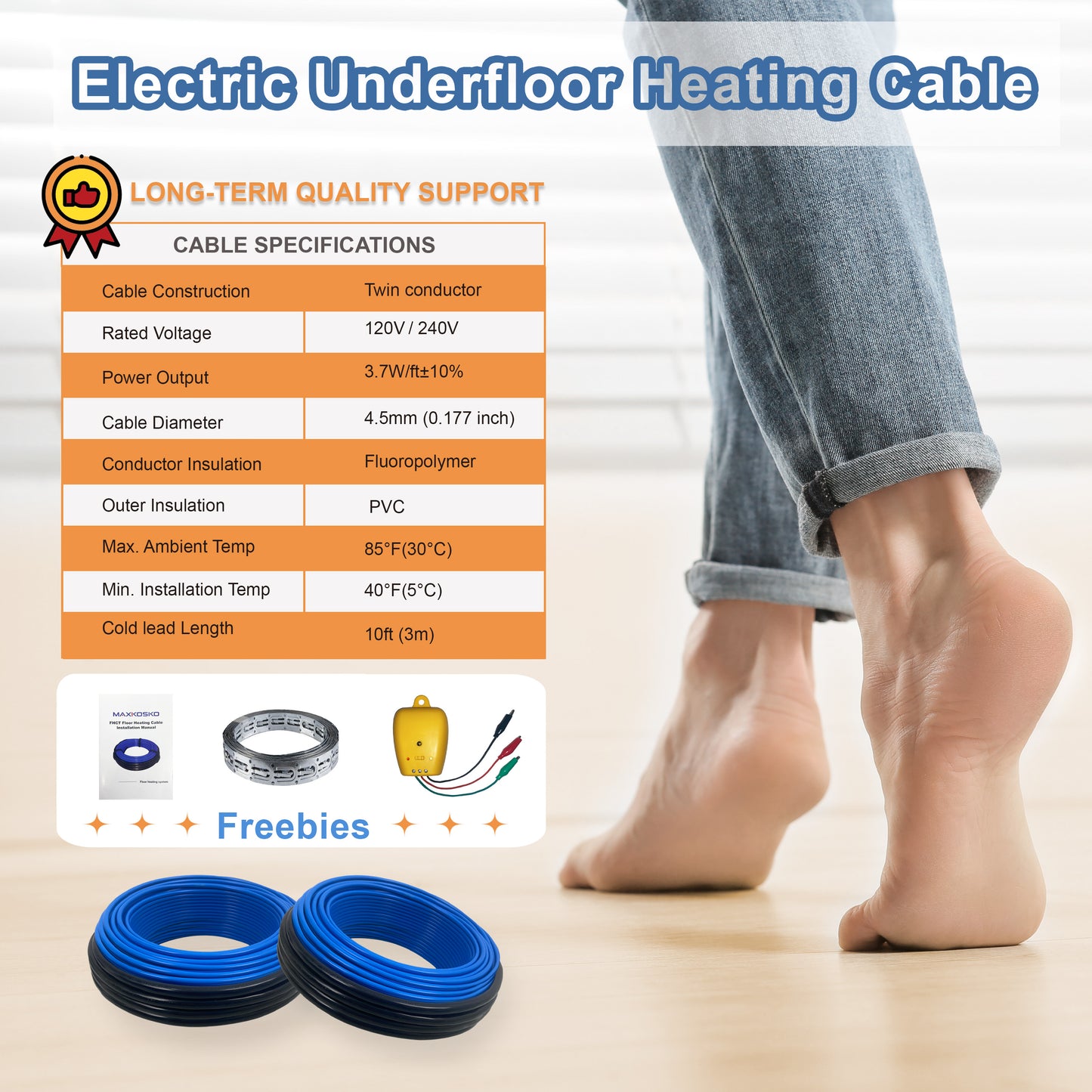
MAXKOSKO Electric Floor Heating Cable provides comfortable radiant floor heat beneath compatible finished flooring. Its flexible loose-cable design is especially suitable for bathrooms, kitchens, entryways, and irregularly shaped areas where a pre-sized heating mat may be difficult to fit.
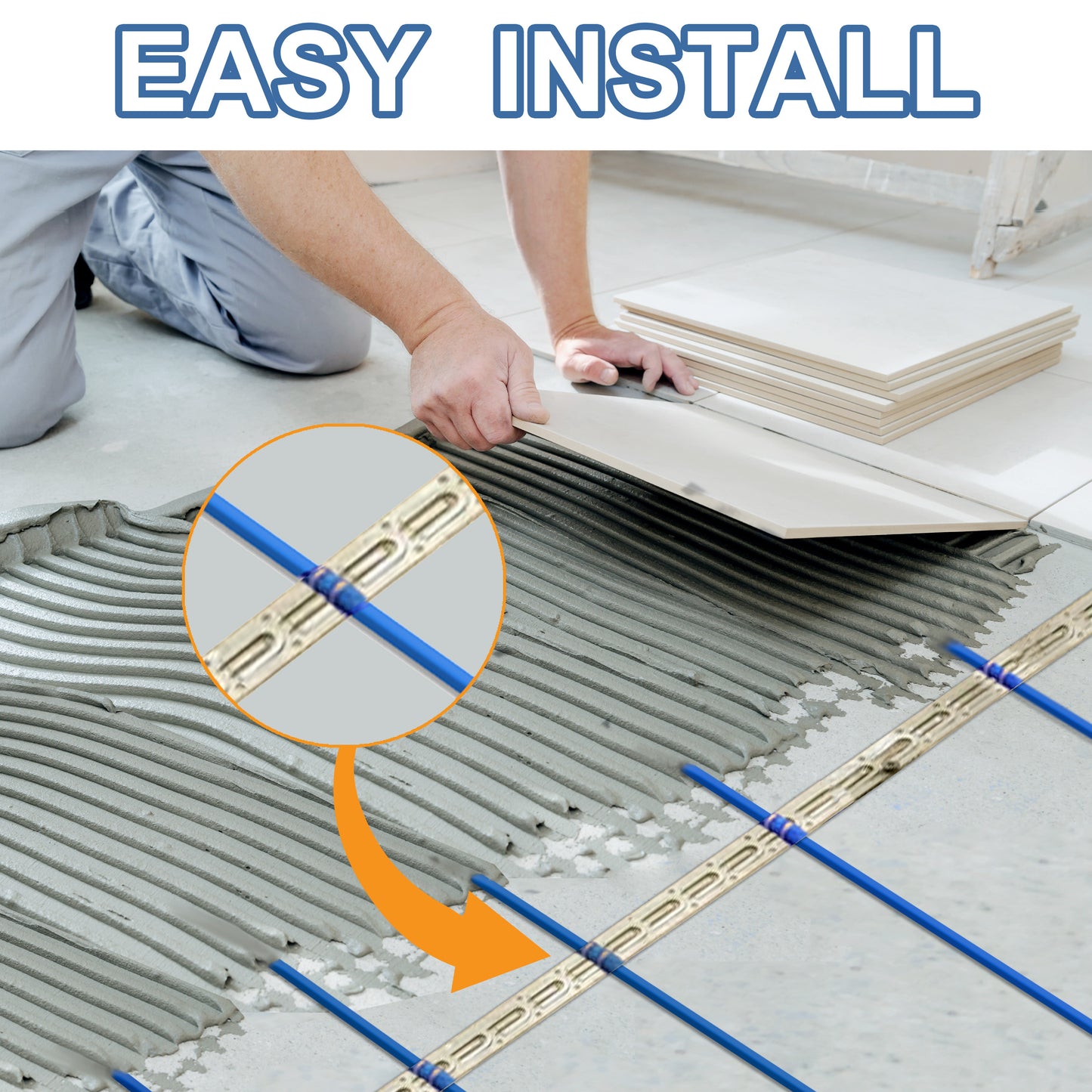
The constant-wattage cable produces approximately 3.7 watts per linear foot and can be installed with a compatible uncoupling membrane or approved cable guide. Select the correct cable size before ordering because the heating cable cannot be cut, shortened, crossed, or spliced.
Flexible Room Layout
Loose-cable installation makes it easier to heat around corners, angled walls, and permanent floor obstacles.
3.7W per Linear Foot
Constant-wattage output provides even radiant warmth when the cable is installed at the approved spacing.
Membrane Compatible
Works with compatible floor heating membranes and approved cable guides for organized, consistent cable spacing.
Multiple Coverage Options
Available in multiple cable lengths for small bathrooms, kitchens, entryways, and larger heated floor areas.
10 ft Cold Lead
The non-heating power lead provides routing flexibility between the heated floor area and thermostat connection box.
Indoor Underfloor Heating
Designed for permanent installation beneath approved flooring in dry or properly waterproofed indoor areas.

Important Before Ordering
Plan the Heated Area Before Selecting a Size
Measure Net Heated Area Only: Exclude toilets, vanities, cabinets, tubs, appliances, permanent fixtures, and other areas where the cable will not be installed.
Choose a Cable No Larger Than the Heated Area: Select a cable that fits within the usable floor area. Excess heating cable cannot be cut off or shortened.
Never Cut the Heating Cable: The blue heating section is a fixed-resistance cable and must not be cut, shortened, crossed, overlapped, or spliced.
Coverage Depends on Spacing: The advertised heating coverage is based on the specified installation spacing. Standard membrane installation typically uses approximately 3.6-inch spacing, or three compatible membrane slots.
Thermostat Required: The system must be controlled by a compatible electric floor heating thermostat and floor temperature sensor.
Confirm Voltage: Select the correct 120V or 240V version for the available electrical circuit. Cable voltage must match the supply voltage.
Electrical Protection Required: The circuit must include code-compliant grounding and ground-fault protection. Final electrical connection should be completed by a qualified electrician.


Floor Heating Cable or Heating Mat?
Choose Loose Heating Cable
Best for irregular rooms, curved areas, narrow spaces, and layouts requiring adjustable cable routing.
Choose a Heating Mat
Best for open rectangular areas where a pre-spaced mesh mat can be unrolled and installed more quickly.
Prefer a pre-spaced system with optional smart thermostat control? View the MAXKOSKO Electric Heated Floor Mat Kit.


Specifications
| Product Type | Loose Electric Floor Heating Cable |
| Cable Construction | Twin-Conductor Constant-Wattage Heating Cable |
| Available Voltage | 120V or 240V, Depending on Selected Variant |
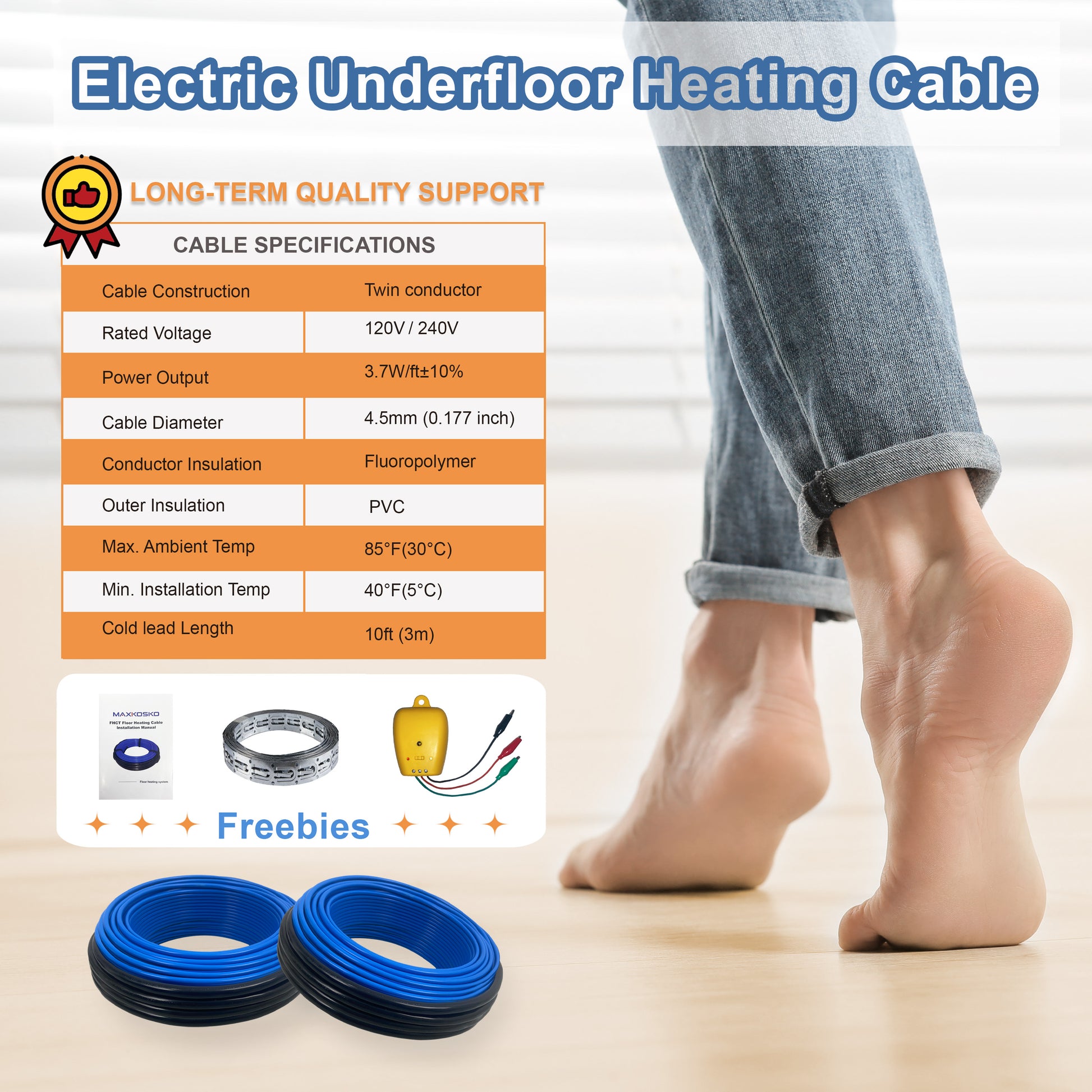
| Heat Output | Approximately 3.7W per Linear Foot |
| Cable Diameter | Approximately 4.5 mm |
| Cold Lead | 10 ft, 2-Wire 16 AWG Plus Ground |
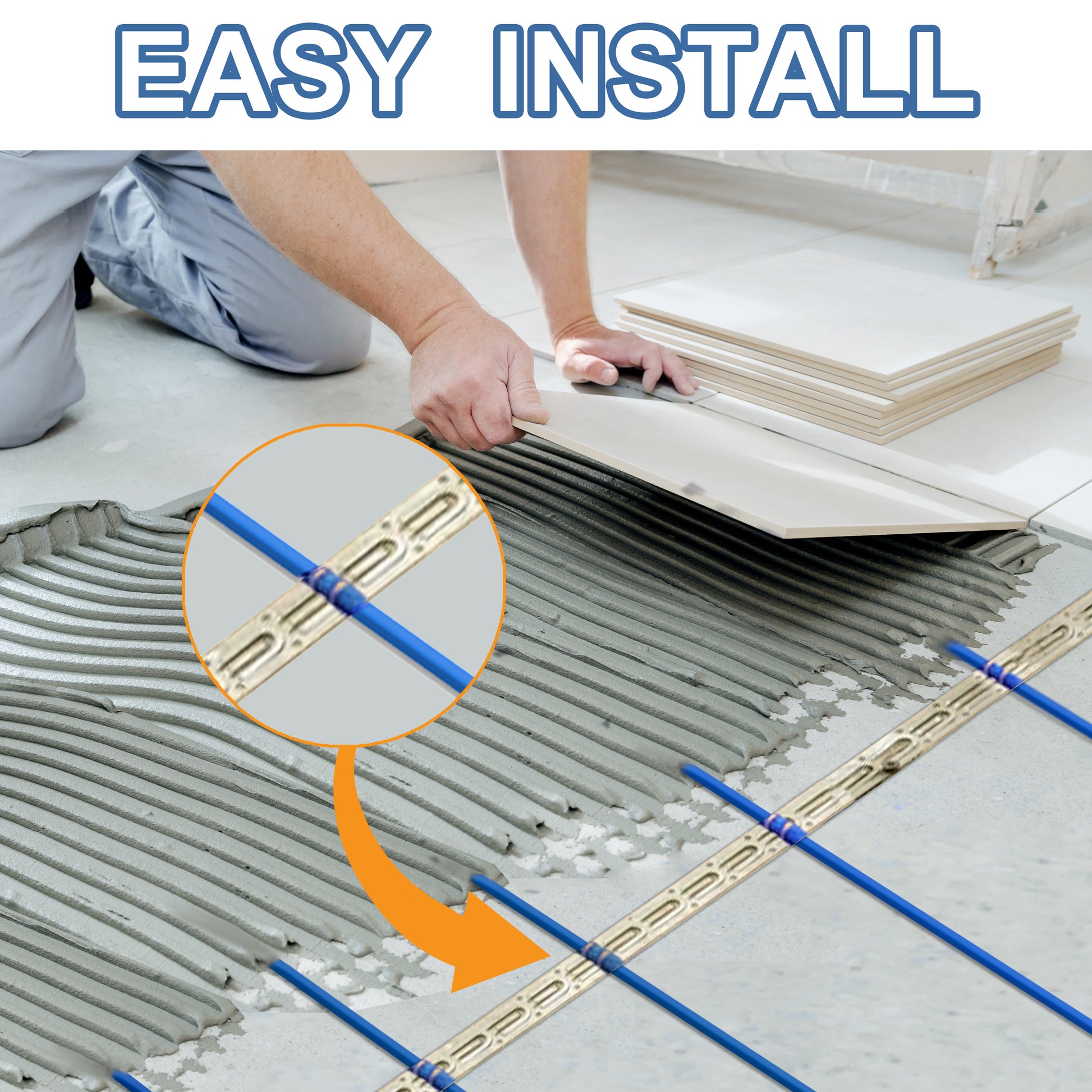
| Typical Installation Methods | Compatible Uncoupling Membrane or Approved Cable Guide |
| Standard Membrane Spacing | Approximately 3.6 in / 3 Compatible Membrane Slots |
| Minimum Installation Temperature | 40°F (5°C) |
| Primary Application | Indoor Electric Radiant Floor Heating |
| Heating Cable Modification | Heating Section Cannot Be Cut, Shortened, Crossed, or Spliced |
| Thermostat | Required and Sold Separately Unless Specifically Included |

How to Select the Right Cable Size View Guide Hide Guide
Select the cable according to the actual floor area that will receive heat, not the total room size.
1. Measure the Room
Calculate the total floor area inside the planned heating zone.
2. Exclude Fixed Objects
Subtract areas beneath toilets, cabinets, vanities, tubs, appliances, and permanent fixtures.
3. Confirm the Voltage
Determine whether the available floor heating circuit is 120V or 240V.
4. Confirm the Spacing
Choose the membrane or guide spacing before calculating the approximate cable coverage.
5. Select the Smaller Size
When the exact heated area falls between two cable sizes, select the smaller system rather than an oversized cable.
Do Not Order an Oversized Cable
The cable cannot be shortened to fit. Any unused cable must still be installed at an approved spacing within the heated floor area.
Do not reduce spacing excessively, overlap the cable, or install it beneath permanent fixtures to use excess length.
Basic Installation Requirements View Requirements Hide Requirements
- Complete the floor layout before unrolling the heating cable.
- Test and record cable resistance before, during, and after installation.
- Install the floor sensor between two cable runs without touching the heating cable.
- Maintain the approved cable spacing throughout the heated area.
- Embed the entire heating cable in suitable mortar, thin-set, concrete, or another approved material.
- Do not install the heating cable in walls, ceilings, cabinets, or across expansion joints.
- Do not energize the system until the mortar and floor covering have fully cured.
- Follow the complete product manual, flooring instructions, and local electrical codes.
Professional Electrical Connection Required
The thermostat, floor sensor, heating cable, grounding conductor, circuit protection, and power supply must be connected according to the applicable wiring diagram and local electrical requirements.
Frequently Asked Questions
Can the floor heating cable be cut to fit the room?
No. The heating section is manufactured to a fixed length and resistance. It must never be cut, shortened, crossed, overlapped, or spliced.
How do I choose the correct cable size?
Measure only the open floor area where the cable will actually be installed. Select a cable that is equal to or slightly smaller than this net heated area.
What installation spacing should I use?
Spacing depends on the selected membrane or cable guide. Standard membrane coverage is typically based on approximately 3.6-inch spacing, or three compatible membrane slots.
Can the cable be installed beneath cabinets or a toilet?
No. Do not install it beneath permanent fixtures or objects that prevent heat from dissipating, including toilets, vanities, cabinets, tubs, and fixed appliances.
What flooring can be installed over the cable?
Tile and stone are common applications. Other floor coverings may be compatible when approved by the flooring manufacturer and installed within the permitted temperature and thermal resistance limits.
Should the cable be tested during installation?
Yes. Cable resistance and insulation resistance should be measured and recorded before installation, during installation, and after the floor covering is completed.
Guides & Resources
Review the Installation Manual Before Ordering
Before selecting a cable size, confirm the net heated area, supply voltage, installation spacing, thermostat requirements, flooring type, and electrical circuit capacity.
For troubleshooting and heating performance guidance, read Why Is My Room Not Warm Even When the Floor Heating Is On?
